
Thinking about training as a massage therapist? One of the first questions most prospective students ask is, “How much can I earn?”
The answer depends on how you choose to work. Massage therapists can be employed in spas, salons and clinics, work as mobile therapists, rent a treatment room, or build a successful self-employed practice.
In this guide, we’ll look at realistic massage therapist salary expectations for in the UK during 2026.
Average Massage Therapist Salary in the UK
Recent UK massage therapist salary data suggests massage therapists earn an average of around £22 per hour, although actual earnings vary considerably depending on experience, location and employment status.
Unlike many professions, massage therapy has no fixed salary. Two therapists with identical qualifications may earn very different incomes depending on:
Number of clients
Treatment prices
Location
Reputation
Experience
Specialisms
Whether they are employed or self-employed
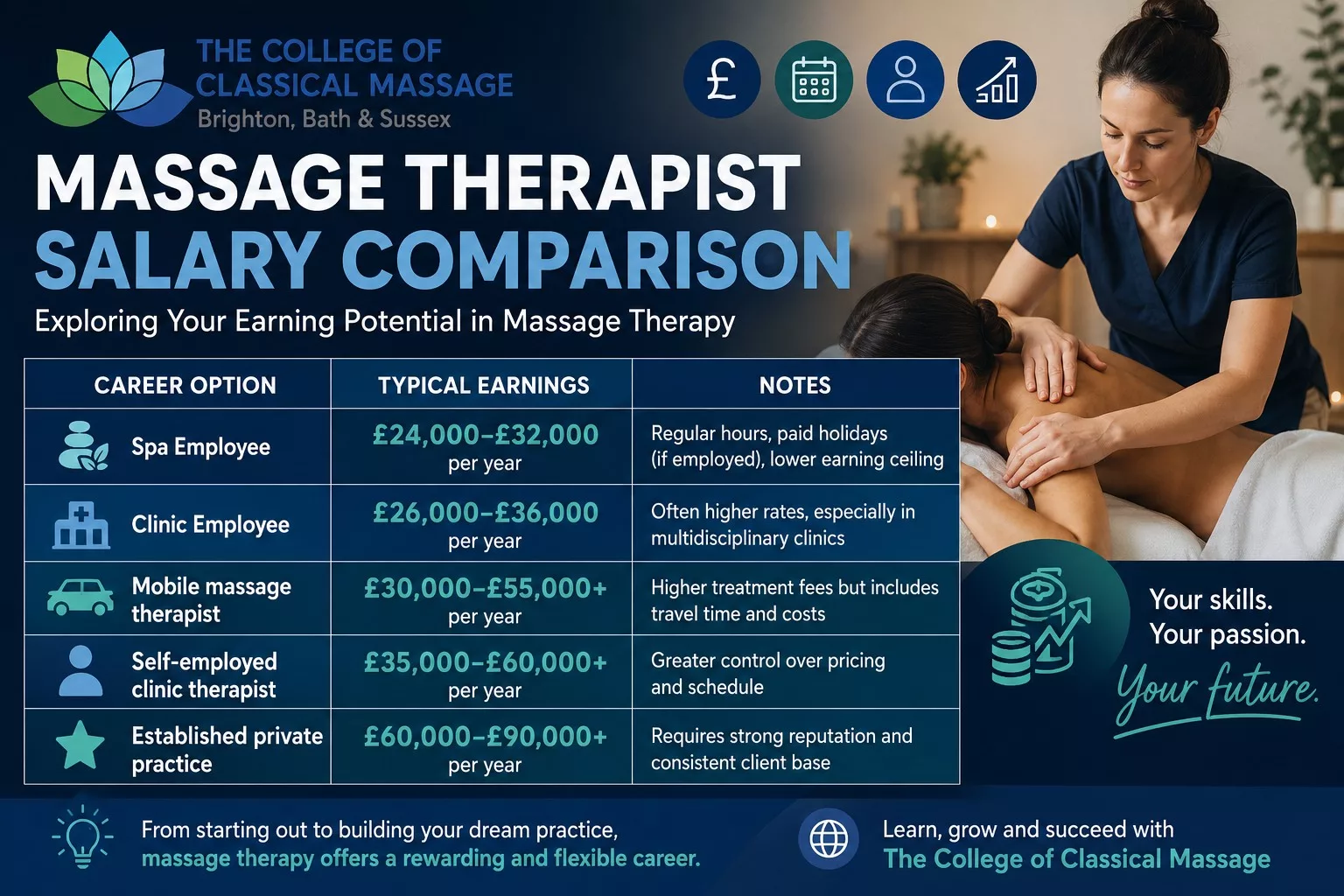
Massage Therapist Salary Comparison
| Career Option | Typical Earnings | Notes |
| Spa Employee | £24,000–£32,000 per year | Regular hours, paid holidays (if employed), lower earning ceiling |
| Clinic Employee | £26,000–£36,000 per year | Often higher rates, especially in multidisciplinary clinics |
| Mobile massage therapist | £30,000–£55,000+ per year | Higher treatment fees but includes travel time and costs |
| Self-employed clinic therapist | £35,000–£60,000+ per year | Greater control over pricing and schedule |
| Established private practice | £60,000–£90,000+ per year | Requires strong reputation and consistent client base |
These figures are illustrative estimates based on current UK rates and common pricing models. Individual earnings vary depending on workload, pricing and business expenses.
Working in a Spa
Many newly qualified therapists begin their careers in spas.
Benefits include:
- Regular income
- Paid training in some businesses
- Reception and marketing handled for you
- No need to find your own clients
- Team environment
Typical salaries range from £24,000 to £32,000 per year, with opportunities to increase earnings through commission, retail sales and gratuities depending on the employer.
Spa work is an excellent way to build confidence and gain valuable experience with a wide range of clients.
Working in a Clinic
Massage therapists working in physiotherapy clinics, chiropractic practices or multidisciplinary health clinics often earn slightly more than those working in spas.
Clinics may pay:
- An hourly wage
- A percentage of treatment fees
- A self-employed contractor split
Experienced therapists commonly earn the equivalent of £26,000–£36,000 per year, with higher incomes possible in busy private clinics.
Mobile Massage Therapist
Mobile massage has become increasingly popular because clients appreciate the convenience of receiving treatments at home.
Many mobile therapists charge:
- £60–£90 for a one-hour treatment
- More for evenings, weekends or specialist treatments
- Although travel reduces the number of appointments possible each day, higher prices can offset this.
A busy mobile therapist seeing four to five clients per day may generate annual revenues well above £50,000 before expenses.
Mobile therapists should also budget for:
Fuel
Vehicle costs
Equipment
Insurance
Travel time
Self-Employed Massage Therapist Salary
Self-employment offers the highest earning potential.
Instead of receiving an hourly wage, you keep the income from your treatments (after business expenses).
For example:
- Charge £60 per treatment
- See four clients each day
- Work four days each week
- Take six weeks’ holiday
This could produce gross revenue of around £43,000 per year before deducting business costs.
As your experience grows, many therapists increase their prices to £70–£90 or more per treatment, significantly increasing annual income.
Many successful therapists also generate additional income through:
- Corporate massage
- Sports events
- Gift vouchers
- Specialist treatments
- Teaching
- Selling wellness products
Employed vs Self-Employed
Employed
| Advantages | Disadvantages |
| Predictable income | Lower earning ceiling |
| Holiday pay | Less flexibility |
| Pension contributions | Fixed working hours |
| Less administration | Having to answer to a boss |
| Easier when starting out | Limited holiday days |
Self-Employed
| Advantages | Disadvantages |
| Higher earning potential | Variable income |
| Set your own prices | Responsible for tax and bookkeeping |
| Flexible schedule | Need to market yourself |
| Choose your clients | No paid holidays |
| Build your own business | Self motivation |
Many therapists combine both approaches—for example, working three days in a clinic while building a private client base on evenings or weekends.
What Affects Your Massage Therapist Salary?
Several factors influence your income more than your qualification alone.
-
Experience
Clients are often willing to pay more for experienced therapists with excellent reviews and strong word-of-mouth recommendations.
2. Location
Therapists working in cities and affluent areas generally charge higher treatment prices than those in smaller towns.
3. Specialisms
Additional training in areas such as:
Pregnancy massage
Manual lymphatic drainage
can increase earning potential.
4. Marketing
Successful therapists don’t simply rely on qualifications—they build a professional website, encourage client reviews, maintain strong referral relationships and develop repeat business.
Can You Make a Good Living as a Massage Therapist?
Yes!
Many therapists begin by working part-time while developing confidence and experience. As their client list grows, they often transition into full-time self-employment.
Massage therapy offers something many careers cannot:
Flexible working hours
Meaningful client relationships
Opportunities to specialise
The ability to build your own business
Excellent work-life balance
Your income is influenced not only by your technical skills but also by your professionalism, client care and ability to build lasting relationships.
Start Your Massage Career
If you’re considering a career in massage therapy, choosing a recognised professional qualification is an important first step.
At the College of Classical Massage in Brighton, Bath, and Sussex, our ITEC massage courses provide students with the practical skills, anatomy knowledge and professional standards needed to begin a rewarding career in massage therapy.
Whether your goal is to work in a spa, join a clinic or establish your own successful practice, professional training gives you the foundation to build a career with genuine long-term earning potential.